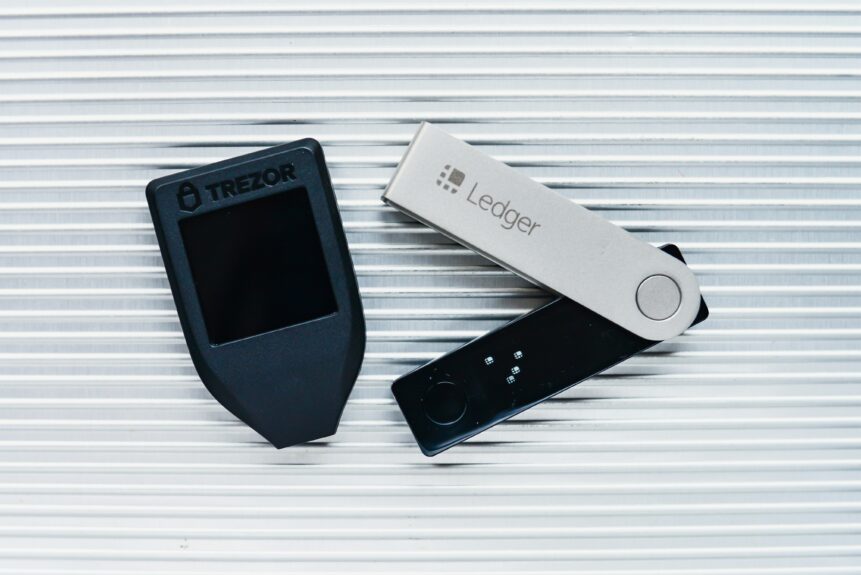
Let’s dive into one of the most essential tools for navigating the crypto world: wallets.
The first thing to know about wallets is this: there’s no one wallet to rule them all. Each type of wallet has its purpose, and understanding these differences will help you choose the right tools for your needs.
Soft wallets vs. hard wallets: What’s the difference?
Soft wallets are convenient and easy to use, but they’re connected to the internet, which makes them more vulnerable to hacks.
Hard wallets, on the other hand, are the gold standard for security. They stay offline until you plug them in to make a transaction. Which makes them less convenient, but much harder to hack.
If your portfolio is over $5,000, or you’re holding several assets from the DWG watchlist – we recommend a hard wallet for safety and security.
Trezor, Ledger, or both?
Trezor and Ledger are the two big names for hardware wallets, and they each have their strengths.
Trezor is the daily driver – simple, intuitive, and good for frequent transactions. However, Trezor doesn’t natively support some blockchains that are used in DeFi, so it requires workarounds or third-party apps.
Ledger, on the other hand, has smoother integrations, broader compatibility and supports a wider range of assets, particularly in the DeFi space.
If you have a diverse portfolio, you may want to use both so you have the best possible coverage. And if one wallet breaks, gets lost, or needs a reset, you’ll always have a backup.
With each of these wallets, make sure you are buying them from the official websites. Websites like eBay or Amazon might save you a few bucks, but it could cost you all your crypto. Scammers have been known to modify and pre-load them pre generated recovery phrases to steal your funds.
Only wallets purchased directly from the manufacturer or authorised retailers guarantee untouched, original hardware and firmware. Risking your crypto for a discount isn’t worth it.
The bottom line
As of right now, a perfect, all-in-one wallet solution doesn’t exist. At DWG, we recommend choosing a blend of wallets based on the coins you hold:
By using a combination of these tools, your portfolio will be accessible, secure and safe.





Well, it’s official – the exciting phase of this crypto bull market has begun! Over the last week, we’ve seen…

My Top 7 Security Tips Explained Since the safety of your crypto relies completely on how you handle it…

As longtime readers know, we here at DWG prefer a "buy and hold" or so-called ‘HODL’ investment strategy, especially regarding…